
"coffee seed types"
2000 article(s) found

Introduction to the types and characteristics of Yunnan Coffee whether the Arabica coffee beans in Yunnan are pure enough
Professional coffee knowledge exchange more coffee bean information please follow the coffee workshop (Wechat official account cafe_style) Qianjie-Yunnan Coffee introduction the western and southern parts of Yunnan Province are located between 15 North latitude and the Tropic of Cancer, most areas are 1000-2000 meters above sea level, the topography is mainly mountainous, sloping land, and undulating, fertile soil, sufficient sunshine, rich rainfall, large temperature difference between day and night.

The type of coffee in Yunnan, the main producing area of Yunnan small-grain coffee.
Follow the caf é (Wechat official account vdailycom) found that the beautiful cafe opened its own shop and planted Arabica coffee beans in Yunnan. The varieties were first introduced in 1892 in Zhukula area, Pingchuan Town, Binchuan County, Dali Prefecture, Yunnan Province. Arabica Bourbon and Arabica Tippica coffee beans were introduced, and then Kenya Katimo (Arabica and Luo) was introduced in 1991.
General situation of Coffee beans in Water washing and drying
Small and round dark brown coffee beans, quietly emitting a fragrant fragrance in the grinder, injected into the cup showing the beautiful color of amber, these are the three very deep impressions of coffee. As you explore the history and beauty of coffee, you can also see the coffee trees that are caressed by the tropical sun and whose leaves twinkle. It has small white flowers similar to jasmine.
Basic knowledge of specifications and grades of coffee beans
Coffee beans are graded in different countries according to different grading systems. Some of these classification processes are overly complex and ineffective, such as the Haitian classification method, while the classification devices used in Brazil, despite their complex structure, are indeed necessary. Overall, there are six export grades, the highest being SHB (strictlyhardbean) extra hard coffee beans, or highland coffee beans.

The most suitable conditions for the cultivation of Coffee trees Coffee Bean Baking
Washing type: in the sink, after rubbing with water and utensils, the pulp and colloid are removed and dried, which is called washing coffee bean with uniform quality. Non-washing type: after the sun is naturally dried, the pulp and peel is removed by a sheller, and its quality is unstable. b. The fruit of flat bean / round bean coffee is made up of two oval seeds opposite each other. The connecting side is a flat joint, called

The growth of coffee trees
The growth and fruit of coffee trees varies with different varieties / environmental conditions. In the high altitude area of Yunnan, the small seed coffee cultivated has the advantages of cold climate, large cloud cover, short light and slow plant growth, but the branches develop into sturdy backbone branches after the first branch bears fruit, and the second / third branch has strong ability to produce. The growth is exuberant and the fruit is dense, which is the main fruiting branch, so it is suitable to adopt single trunk shaping. Two / three
Characteristics of Arabica coffee beans in El Salvador the story and flavor of Pacamara coffee beans
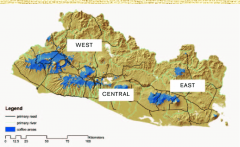
The coffee produced in El Salvador belongs to the Arabica coffee category. The variants of coffee are Bourbon, Pacas, Tekisic, Pacamara and Maragogype. The main type of coffee plant found in most plantations is bourbon, followed by Pacas. Pacamara: physically, it is a big fruit and seed. Good body, aroma and acidity and unique style
Katim Coffee characteristics, Katim Coffee planting
Follow Kaiping (Wechat official account vdailycom) found that the beautiful cafe opened its own shop with 3846 seeds per kilogram when it was cool in the sun for two months. There were about 5000 seeds in cool sun for 5 months, the germination rate was more than 95% in two months after seed production, 85% in three months, became weak after three months, and most seeds lost their germination rate after six months. Resistance to leaf rust

Coffee types Coffee origins Coffee characteristics Coffee processing methods Processing methods
Coffee varieties are treated differently Coffee varieties are small shrubs grown in tropical highlands, Coffee trees grow red or yellow fruits, and the inner
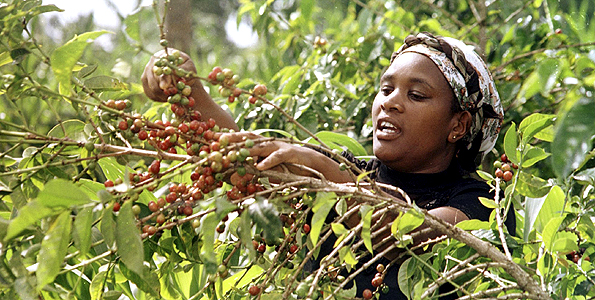
Coffee from fruit to raw bean dry washing semi-washing refined Colombian coffee beans
Coffee changes from fruit to raw bean there is a pair of oval seeds in the middle of the fruit, which are covered with outer skin, inner pulp and pulp. Ripe fruit spoils in a short time without treatment. Refining is to remove the skin and pulp of the coffee fruit, and then take out the seeds. Generally speaking, about 1 kg of raw coffee beans can be obtained from 5 kg of coffee fruit. The refining methods include drying and washing.

Fine coffee beans: two production methods of coffee beans and how to choose coffee beans
After harvest, peel, pulp, racing peel and silver peel should be removed before shipping and listing. There are two kinds of methods: drying (also known as natural or non-washing) and washing. Dry type: the method is relatively simple. First of all, spread the freshly harvested fruit on the sun field for a week or two until the fruit crackles and dries naturally. After that, the sheller will dry the fruit.
Coffee essence
Coffee beans are the seeds in the coffee fruit, which are exposed to strong sunlight and are not removed until the shell is cracked. This method is called "non-washing" or "natural drying". Another way is to put the coffee fruit in the sink to flash, soak in water to soften and then remove the "washing" of the flesh.

Introduction to the origin, characteristics, flavor and taste of coffee beans
At present, the main tree species planted are Arabica species, Robusta species (Carneva species) and Liberika species. It can be subdivided into dozens of varieties, which will be distinguished in production, circulation and trading. Even in the same producing country, there will be subtle effects on the flavor and quality of coffee beans because of the differences in climate, altitude and soil quality in different regions.
Common coffee terms
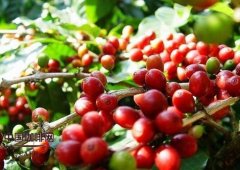
About coffee beans: * Coffee cherry: the fruit of a coffee tree, named because its rind is bright red and its shape is very similar to cherries. * round beans: when the coffee fruit is growing, one of the two seeds develops very well, and the other seed is eaten so that the coffee bean that should be oval becomes round. * Elephant beans: bigger than ordinary coffee beans and usually taste

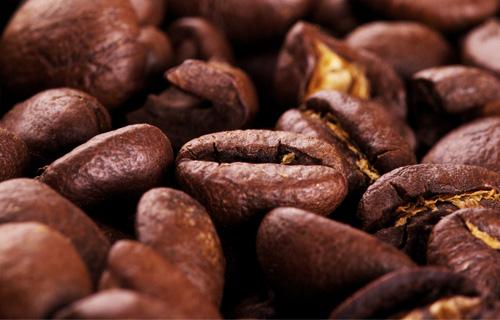
A small, round, dark brown coffee bean.
Small and round dark brown coffee beans, quietly emitting a fragrant fragrance in the grinder, injected into the cup showing the beautiful color of amber, these are the three very deep impressions of coffee. As you explore the history and beauty of coffee, you can also see the coffee trees that are caressed by the tropical sun and whose leaves twinkle. It has small white flowers similar to jasmine.

How do coffee beans come from? what are the legends about coffee beans?
Coffee tree belongs to the evergreen tree of Rubiaceae. Since ancient times, most of the plants of Rubiaceae are plants with special effects, such as quinine tree, which is regarded as a specific drug for malaria, and Dugan, which is used to treat amoeba dysentery. Coffee is defined as the most unique alkaloid drinking flora. Usually after sowing for two to three years, coffee trees can grow to a height of about five to ten meters, but to prevent coffee beans from losing their aroma and flavor.
What is the difference between good and bad coffee beans?
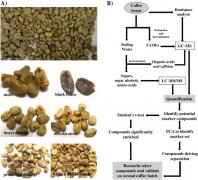
Have you ever wondered why coffee beans go bad? What are the defects of coffee beans? Why do they have such defects? Today, Qianjie Coffee will take you to see what kinds of defective beans are and the reasons for the formation of defective beans! Coffee processing usually begins on the same day as the fruit is harvested to prevent unwanted fermentation that could alter the chemical properties of the coffee beans. this
Basic knowledge of boutique coffee the growth of coffee trees
The growth and fruit of coffee trees varies with different varieties / environmental conditions. In the high altitude area of Yunnan, the small seed coffee cultivated has the advantages of cold climate, large cloud cover, short light and slow plant growth, but the branches develop into sturdy backbone branches after the first branch bears fruit, and the second / third branch has strong ability to produce. The growth is exuberant and the fruit is dense, which is the main fruiting branch, so it is suitable to adopt single trunk shaping. Two / three
Interpretation of coffee industry terms
About coffee beans: * Coffee cherry: the fruit of a coffee tree, named because its rind is bright red and its shape is very similar to cherries. * round beans: when the coffee fruit is growing, one of the two seeds develops very well, and the other seed is eaten so that the coffee bean that should be oval becomes round. * Elephant beans: bigger and tastier than ordinary coffee beans

The growth of coffee trees the process of growing coffee beans
The growth and fruit of coffee trees varies with different varieties / environmental conditions. In the high altitude area of Yunnan, the small seed coffee cultivated has the advantages of cold climate, large cloud cover, short light and slow plant growth, but the branches develop into sturdy backbone branches after the first branch bears fruit, and the second / third branch has strong ability to produce. The growth is exuberant and the fruit is dense, which is the main fruiting branch, so it is suitable to adopt single trunk shaping. Two / three